Poklonnaya Gora (or Victory Park) is a magnificent memorial erected in Moscow in memory of the fallen soldiers for the freedom of the Motherland. The people's grief and pride for the Russian people are reflected in this architectural complex with grandiose monuments, beautiful, slender buildings and outstanding monuments.
Each of them carries the pain and the glory, the memory and tears, courage and suffering. The history of the creation of this memorial place is not simple – there was national enthusiasm, protest actions, and heated discussions. Nevertheless, now it is one of the favorite places of recreation for citizens and guests of the capital, who appreciated the solemnity of architecture, the splendor of fountains and alleys, the grandeur of the plan. In addition, Poklonnaya Gora is a giant platform for large-scale actions dedicated to significant events in the history of our country, as well as the life of the city.
History of Poklonnaya Gora
Poklonnaya Gora, or rather what is left of it, is located in the Western district of Moscow. Once it was a high hill with a magnificent view of the capital from the top. Even 100 years ago, the mountain was outside the city, and according to one version, its name comes from the established tradition when approaching the capital to stop at this place and bow to the city's temples, their Golden domes and snow-white walls.
The history of the mountain is associated with the most significant milestones in the life of the Fatherland. At the end of the XVI century, the Crimean Khan Gazhi Gerai camped on the hill when he tried to capture the capital of Muscovy. And a few years later, in 1610, the Hetman Stanislav zholkevsky stopped here, intending to put the Polish king's son on the Russian throne. Finally, it was from here that Napoleon looked at Moscow on a cold September morning in 1812, waiting in vain for a delegation with the keys to the city. And during the Second world war, thousands of volunteers went to the front line, bypassing this line.
The idea of erecting a memorial dedicated to the heroism of the defenders of Moscow was born during the war. However, the country, exhausted by hardships and millions of victims, could not yet implement a large-scale plan that requires significant costs. Only in February, 1958, on defender of the Fatherland Day, a memorial symbol was laid on the hill, proclaiming the construction of a memorial on this site. Soon, on an area of 135 hectares, green spaces were created and a Park was laid. For many years, the territory of the mountain served as a natural Park for Muscovites, where they liked to spend their free time in winter and summer. Even then, there was a tradition to organize mass events and folk festivals at this place.
In 1968, a triumphal arch was installed near the Park, recreating an architectural monument of the early XIX century, dedicated to the destruction of Bonaparte's army.
In the 1980s, money was raised for the construction and improvement of the memorial. About 200 million people's rubles were collected, and construction began. However the decision to demolish part
Poklonnaya Gora caused public discontent and led to one of the first protest actions in perestroika. On may 6, 1987, hundreds of protesters took to Manezhnaya square with placards calling for the rescue of Poklonnaya Gora. For several months, the construction of the memorial was suspended, but by the end of the year, part of the mountain was still demolished. However, soon the money ran out, and the construction of Victory Park and the building of the WWII Museum turned into a long-term project. Only a few years later, construction on Poklonnaya hill continued, and on may 9, 1995, the official opening of the Victory Park took place.
Victory Park on Poklonnaya hill
So, on may 9, 1995, on the day of the 50th anniversary of the great Victory, the memorial on Poklonnaya hill was officially opened. The event was attended by President of the Russian Federation Boris Yeltsin, and a parade of troops of the city garrison took place.
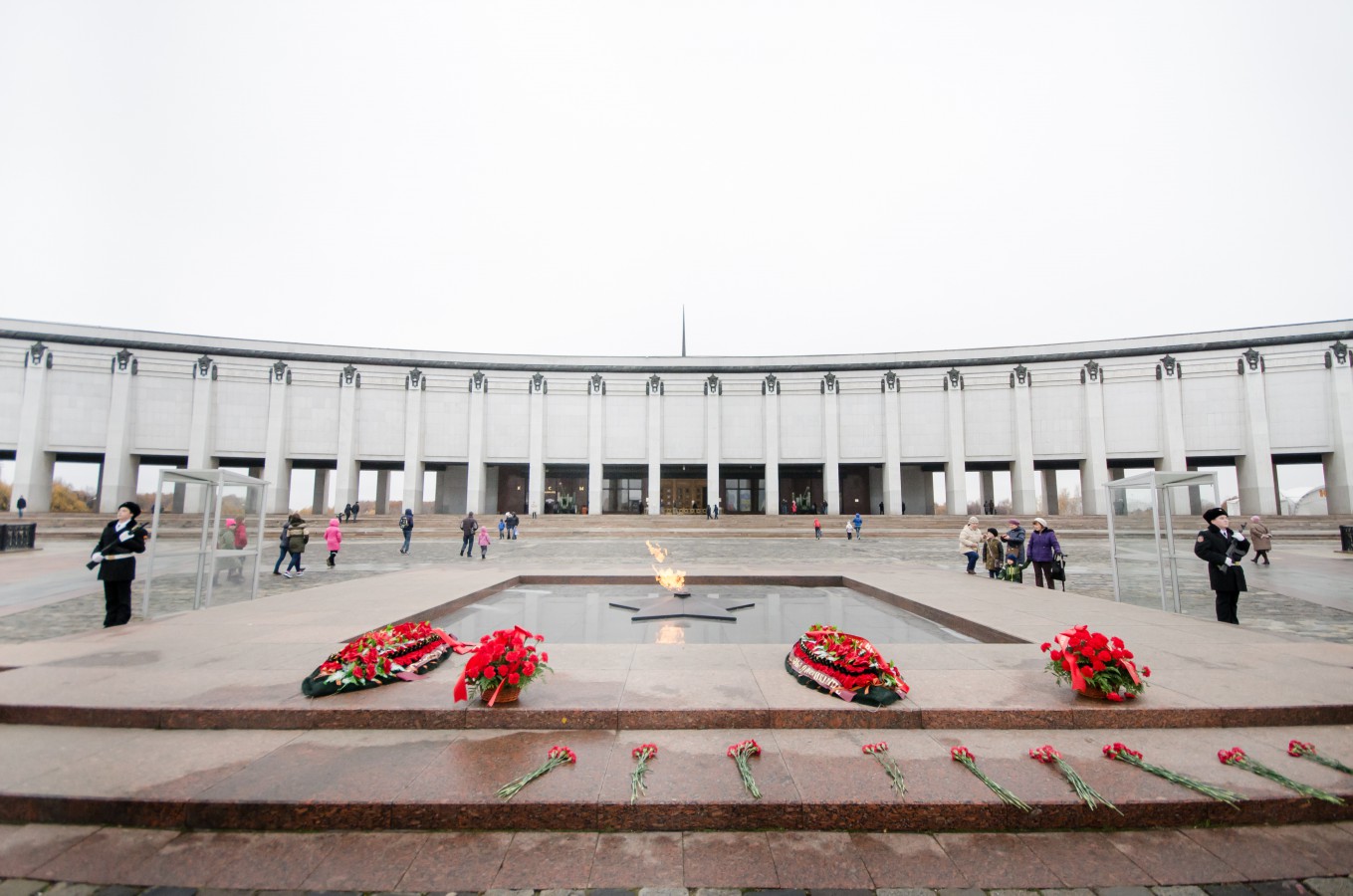
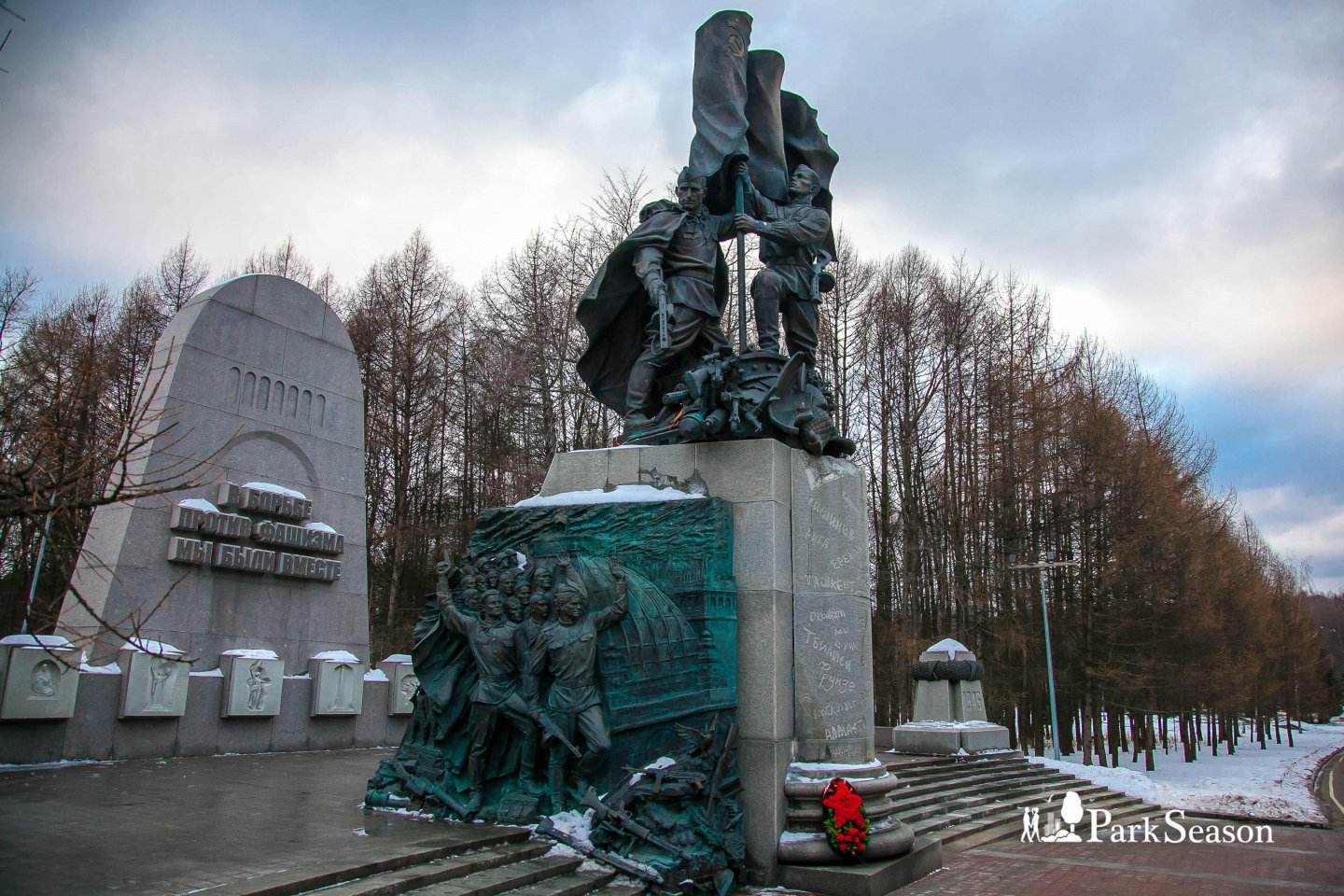
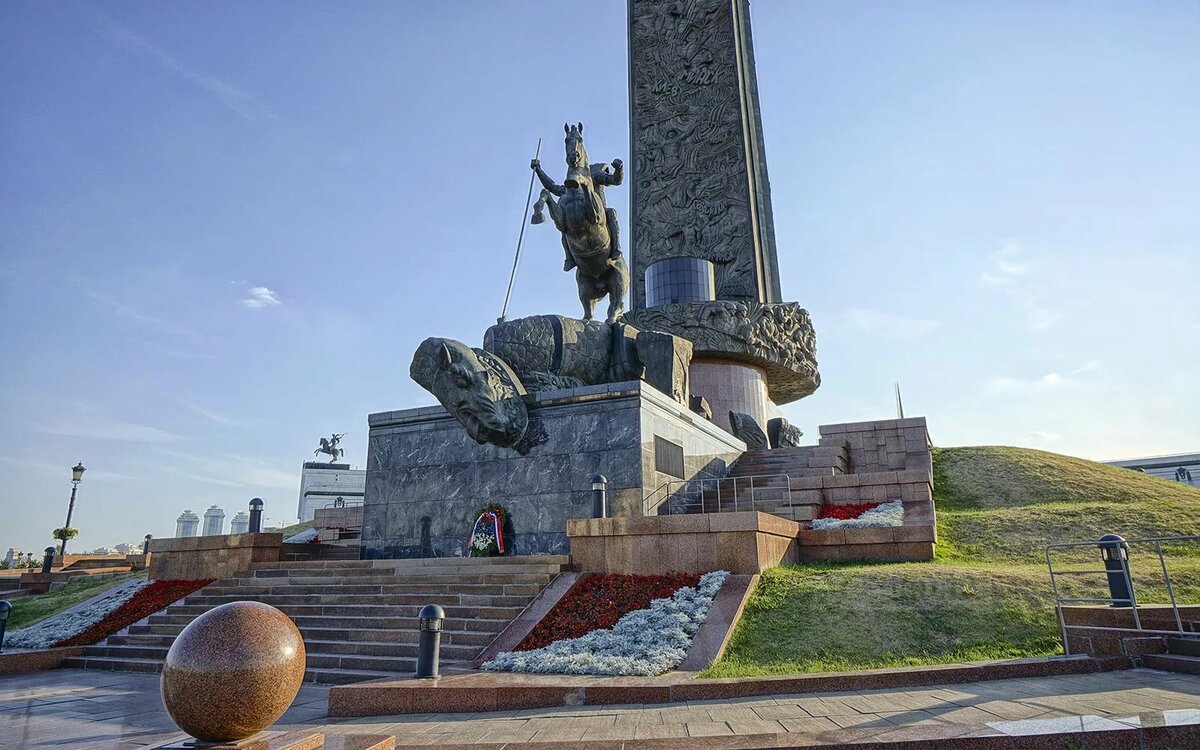
Victory Park on Poklonnaya hill is a magnificent architectural complex consisting of dozens of grandiose and beautiful buildings, monuments, and monuments. The space of the memorial and its architecture are imbued with deep symbolism, reflecting the greatness of the feat of the Soviet people and the unprecedented trials that our Motherland went through in the terrible war. Thus, the main monument of the Park – the Victory Monument, a stele in the form of a triangular bayonet has a height of 141.8 m. in Addition to the fact that this is the highest Russian monument, its height reflects the number of days of the second world war. At a height of 104 m, sculptures of the goddess Niki and two angels marking victory are attached to the monument. At the foot of the obelisk is an expressive sculpture of George the victorious.The number of days of war is also reflected in the number of fountains that adorn the Park. There are also 1,418 of them. Of these, 225, which is equal to the number of weeks of continuation of the war, are located on the main alley. The alley consists of 5 ledges-according to the number of years of war. The red undertone of the fountains fills the cascades of water with tragic and mournful meaning.